







AI Hackathon at Silicon Saxony Days 2026
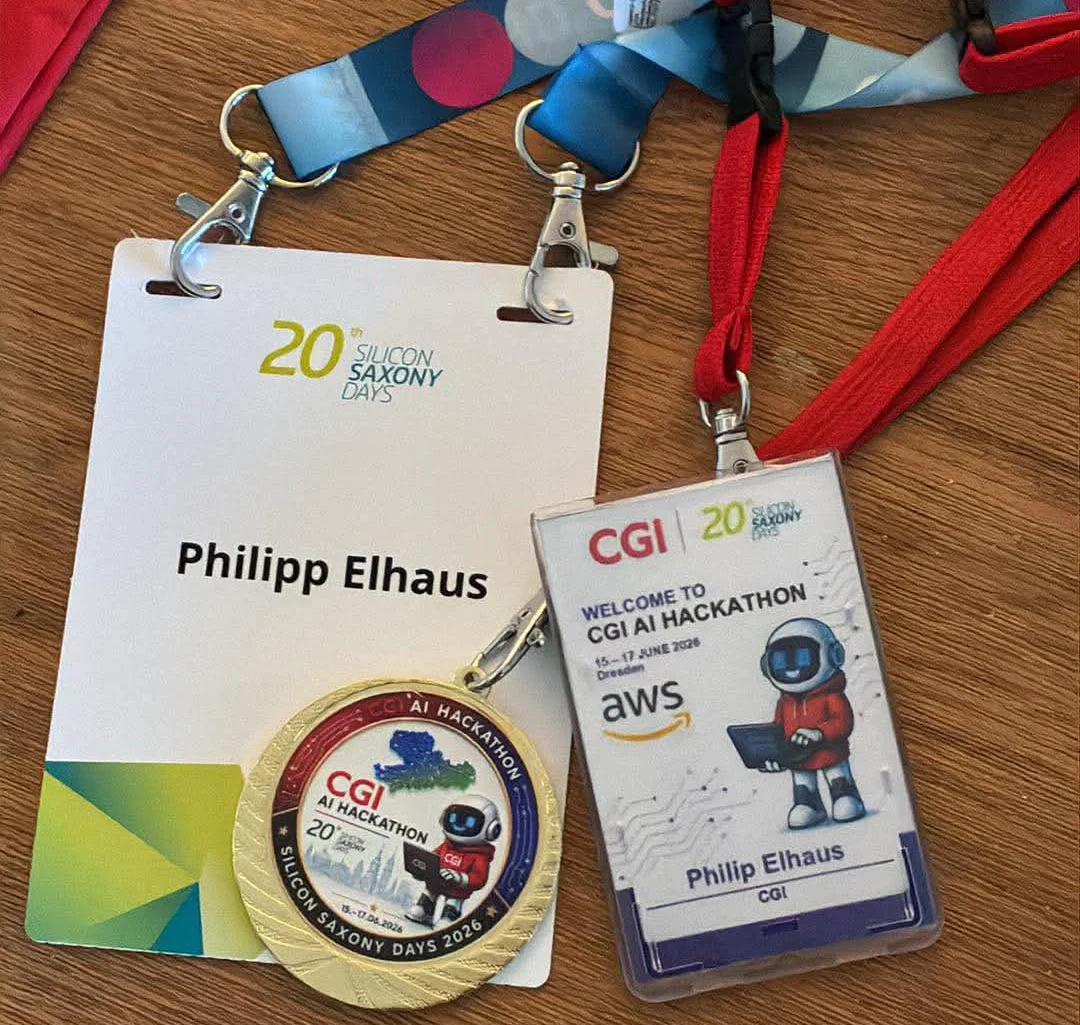
In June 2026, I participated in the CGI AI Hackathon as part of the Silicon Saxony Days 2026. The format was compact: three days on site, a 48-hour build window, and the usual pressure of moving from idea to working prototype to final pitch without much time for polishing.
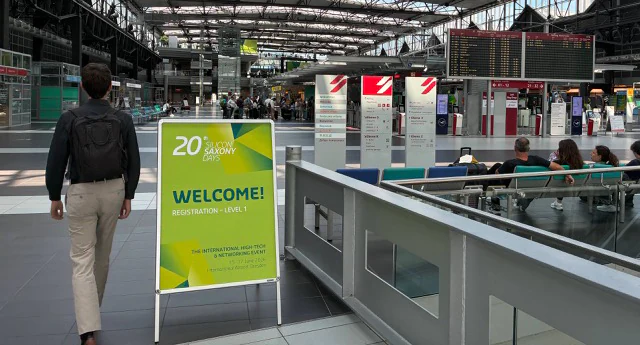
Most of the actual development happened at the CGI office in Dresden, while the wider Silicon Saxony event took place at the airport. That combination worked well: focused building with the team, then a broader fair environment with companies, talks, technical conversations, and useful networking around it.
Build Focus
The task was not just to talk about AI, but to build something concrete. Our team moved quickly from problem framing to solution sketching, implementation, and final presentation.
With only 48 hours for the build, the technical decisions had to stay pragmatic. There was no room for a perfect platform design, but there was also no value in a fragile demo that only worked once on one laptop. My focus therefore shifted heavily toward the DevOps and integration side: repeatable setup, service wiring, environment configuration, model/API integration, RAG alignment, and cleanup before the pitch.
That is usually where these prototypes become real or fall apart. The visible AI behavior matters, but the surrounding plumbing decides whether the system can actually be demonstrated and explained.
The technical core connected AWS (which was also a sponsor of the event), Terraform, Dify.ai, Amazon Bedrock, and a RAG flow for domain-specific knowledge retrieval. The rough stack was:
- Terraform for infrastructure definition
- Amazon Bedrock API for managed foundation-model access
- Titan Embeddings for vector representation
- Dify.ai for workflow and LLM interaction design
- RAG to ground answers in domain material
- Git for team coordination
The useful part was not any single service in isolation, but how quickly the stack could be combined into something coherent. Bedrock provided the model layer, Dify.ai helped shape the interaction flow, and Terraform kept the infrastructure side explicit instead of turning the prototype into manual console work.
The RAG part was especially relevant. Retrieval quality is not only a model problem; it depends on how knowledge is prepared, how embeddings are generated, how context is selected, and how the prompt frames the model’s task. I also helped with the final pitch preparation, which was a useful reminder that technical work is only half of a prototype. The system still needs to be understandable from the outside.
Fair, Pitch, and Outcome
We did not win the hackathon. The other teams were genuinely strong, and several had polished ideas and presentations. That was slightly disappointing, but fair. In a setting like this, execution speed, clarity, story, and demo quality all matter at once.
Still, the event was worth it. Being present at the Silicon Saxony fair, seeing how other teams approached similar AI problems, and talking to people around the ecosystem was valuable on its own. I made useful contacts, had several good technical conversations, and got a better feeling for how AI topics are currently being framed in regional industry contexts.
The strongest takeaway for me was how quickly AI prototyping becomes an integration problem. The model is important, but infrastructure setup, retrieval design, prompt discipline, service integration, team coordination, and presentation clarity decide whether the prototype feels real.